|
Have you noticed how we’re constantly told to walk more, park further away, take the stairs., aim for 10,000 steps a day?
All good advice…
But have you ever wondered why you rarely hear anyone ask…
Are you getting the most from your walking?
One thing I’ve learned over the years is that it’s not just how much you walk that matters—it’s how you walk.
Poor Walkng Habits
Poor walking habits can place unnecessary stress on your back, hips, knees and feet. Over time, this extra strain can contribute to the aches, pains and stiffness that so many people simply accept as “getting older.”
The good news is that small improvements to your posture and walking technique can reduce that strain, helping you walk more comfortably, more confidently and with less risk of pain and falls.
Yet I’m seeing more and more people unknowingly developing walking habits that work against them:
- Leaning forwards
- Rounded shoulders
- Little or no arm swing
- Short, shuffling steps
- Constantly looking down
These habits usually develop gradually through years of sitting, driving, using computers and looking at our phones. Add the natural loss of strength and mobility that often comes with ageing, and our bodies simply adapt to these less efficient movement patterns.
Many people don’t notice the change until walking becomes uncomfortable, hills become harder, or their back, hips or knees begin to complain.
The encouraging news is that your body can learn better movement at any age.
One lady came to see me after years of persistent low back pain. She’d seen several health professionals, yet no one had ever assessed how she stood or walked.
It quickly became clear that years of poor movement habits had left her with a significant sway-back posture. Once we improved the way her body moved and supported itself, her pain gradually eased, she walked more comfortably and her confidence returned.
Treat the Cause, NOT just the Symptom
It reminded me once again that we shouldn’t just treat pain—we need to understand what’s causing it.
That’s exactly why walking coaching is included throughout the Fitness Age 6-Week Programme.
Every coached walk includes practical tips to improve your posture, arm swing, stride length and walking technique.
The aim isn’t to turn you into an athlete, it’s to help you place less strain on your body so you can walk further, with less aches and pains, and with greater confidence.
Should You Use Nordic Walking Poles?
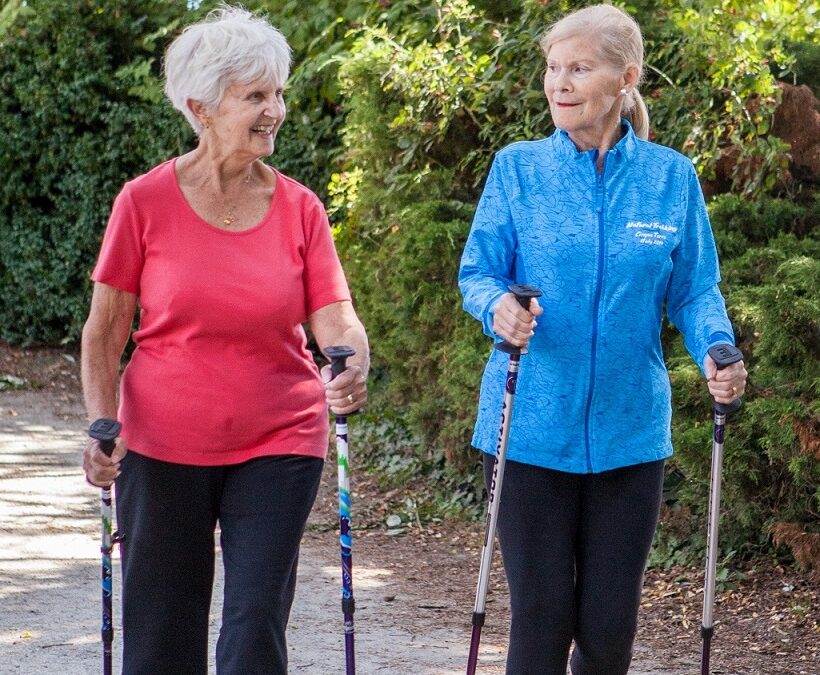
Some participants choose to use Nordic Walking poles.
Others don’t.
Either way, everyone learns how to become a better walker.
Many people are surprised to discover that Nordic Walking isn’t really about the poles.
The poles are simply a brilliant coaching tool. They encourage better posture, a stronger arm swing, a longer stride and more natural movement.
Whether you walk with poles or without them, the goal is exactly the same—to help you move in a way that’s kinder to your body.
If your back aches after a walk…
If your knees complain on hills…
If your hips feel stiff…
Or if walking simply isn’t as enjoyable as it used to be…
Please don’t assume it’s “just your age.”
Sign up to this 6-week programme today and improve the way you move and find out what a remarkable difference it can make
.
CLICK BELOW to learn more about the Fitness Age 6-Week Programme and reserve your place.
FITNESS AGE 6-WEEK PROGRAMME
Fitness Age Assessments, along with Nordic Walking Taster Sessions and Beginner Courses are already available once you enrol, so the sooner you get started, the more you’ll gain from the programme.
One thing less to worry about…
If you choose to use Nordic Walking poles, pole hire is included throughout the programme, so there’s no need to buy your own.
Please do yourself a favor and sign up to this ‘must attend’ programme’. I’d love to help you discover just how good walking can feel and how you’ll begin to feel less aches and pains.
|